Explore the local area with Banbury Bingo

Every now and again, I’ll see someone mention looking for new things to do in the area. Maybe they are new to Banbury and they want to get to know it a bit better. Maybe they’ve been here ages and find themselves in a bit of a rut, looking to shake things up a bit.  And I’ve talked about staycations and local exploring before and shared details on all the things Banbury has to offer. SO my pushing this idea should come as a surprise to no one. But I wanted a new way to present the idea…

So I thought why not make a bit of a game out of it – and thus was born Banbury Bingo, a hopefully helpful way for people to find new things to try and places to see in and around Banbury.
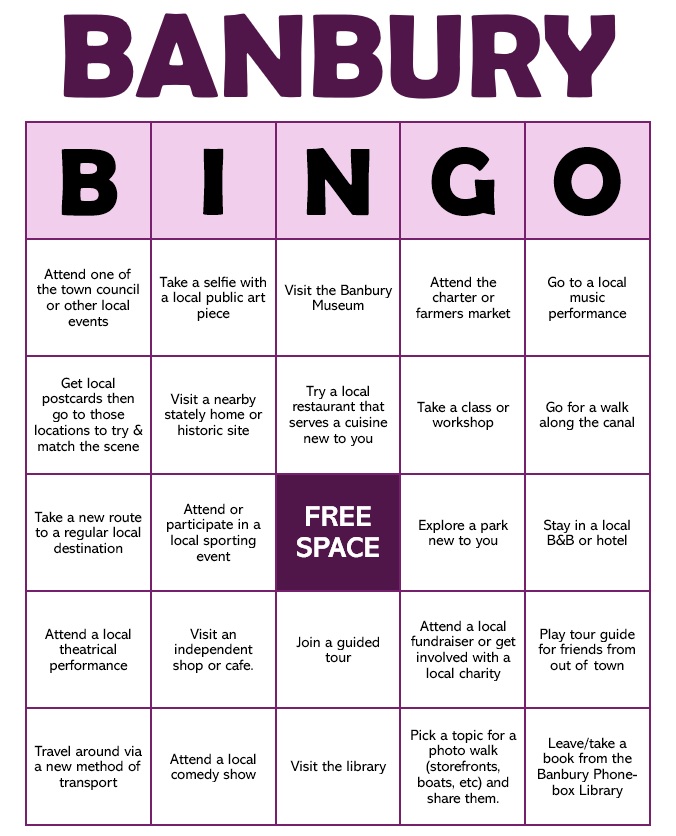
You can download a PDF of this Banbury Bingo card if you like.


Now, on the assumption that if something is genuinely new to you, I thought a few links of helpful info might make choosing squares a bit easier so:

Events: There are lots of events in town during the year – and a lot of them are put on by the town council. Check out Banbury town council events for the rest of 2026. Other events like Banbury Festival of Motoring, Banbury Comedy Festival, and Banbury Early Music Festival (to name but a few) are also calendar highlights.

Markets and Independent Businesses

  • There are two regular markets that take place in the town centre – the charter market and the farmers market and you can find details for them on Banbury Markets facebook page.
  • There’s also the Banbury Artisan Market – happens one Sunday a month in the Market place.
  • Want to find an independent business to support (of course you do) – Banbury Old Town Indies is a great place to start.

Museums, Tours, Stately and Historic Homes

Performances: You can find info on a range of musical performances – everything from pub gigs to tribute acts to musical theatre and operetta.

Libraries:

  • The Banbury Library has lots of stuff to borrow, obviously but it also has a programme of games, crafts and digital helper sessions.
  • The Phone-box Library – hey, it’s got Library in the name, I’ll categorise it as I see fit – has its own facebook page.

Obviously you can find info on lots of other options – quiz nights, car meets, car boots, dog walks, open houses, etc. – by following local Facebook groups and searching Google. But hopefully these links will give you some ideas. And once you’ve got a BINGO – let us know and let us know how it went.
Change Afoot in Northern Oxfordshire

I did say I’d be back with more thoughts on the creation of the Northern Oxfordshire Council alongside Greater Oxford and the Ridgeway. And here I am.

Having had three options on the table, with each having strong and very vocal backers, no choice was ever going to get unanimous cheers – there are simply too many knock-on effects for that sort of unanimity. But sometimes you have a situation where a call must be made, and this was one of them.

IMO, pulling Banbury out from the administrative shadow and the massive tourist gravitational pull of Oxford is more positive than negative.

I don’t imagine that the adjustments and shifts will all be smooth. It’s not going to be a walk in the park. There will be plenty of serious administrative heavy lifting, new strategic alignments, a complete rethinking of how local services and budgets are managed, and political wrestling behind closed doors (and occasionally in the headlines).

Now, given what I’ve spent the last two years doing, it won’t surprise anyone to know I’ve looked at some of this through a visitor economy lens. Not exclusively, but it’s where my head is these days. 

For years, Banbury has effectively been treated as an edge case (if it was noticed at all) while regional visitor economy efforts and investment were (understandably) drawn to Oxford. 

Under the new structure, that dynamic flips and Banbury becomes the new administrative heavyweight, and that position has a direct impact on visitor economy decision-making surrounding the area.

Why do I think Banbury becomes the administrative centre? Well, it’s not because I am privy to any secrets – I can assure you of that. It just makes the most sense. At roughly 50,000 residents, Banbury will be the largest urban settlement in the new Northern authority, outweighing “sibling” towns like Witney (~30k) and Bicester (also ~30k). As Cherwell’s current headquarters is already at Castle Quay, the political and administrative gravity of the new council naturally sits right here in town.

And yes, I know West Oxfordshire’s offices are in Witney. I love Witney. But from a logistical point of view, it makes more sense (to me, anyway) for the headquarters of the council to be in a location with robust transport links. Witney, delightful though it is, simply doesn’t have those.

So, assuming I am right about Banbury becoming the administrative centre of the new council (I might not be, but you never know), it could give the local visitor economy a much clearer focus.

Instead of trying to fit into a generic “Cotswolds-adjacent” or ‘Oxford-overflow’ box, a Northern Oxfordshire council has an opportunity to define its own visitor identity. 

Uniting much of Cherwell with West Oxfordshire gives a single entity control over a unique “Cotswolds & Canal” corridor. Or it could lean into the idea of being England’s crossroads: canals, market towns, country houses, motorsport, the edge of the Cotswolds, and shopping. It’s a story that is economically coherent and distinct from what will very likely remain Oxford’s world-famous academic and heritage offer.

Banbury, thanks to its location and transport links, then evolves from a commuter and transit town into a destination hub. Up until now, regional tourism strategy was all about “dispersing” visitors out of overcrowded Oxford for quick day trips. The new Northern council won’t be trying to manage Oxford’s crowds; it will be focused on keeping visitors and spend right here in the north.

With our rail links and direct M40 access, Banbury is the logical base for people to stay, eat, and explore the wider northern landscape. It’s the next evolution of something we’ve said on The Banburian blog for years: Banbury’s central location makes it an ideal base for exploring some of England’s premier attractions without paying premier-attraction prices for hotels. Stay at a hotel or B&B in Banbury and you are less than an hour (often less than 30 minutes) from a wealth of locations serving a wide range of interests.

In order for the whole of the new council area to feel the benefit of those connections, the “last mile” and the “spoke” parts of the “hub-and-spoke” transport infrastructure will need serious thinking. But then, a lot of things will need serious thinking in the new council’s landscape. What’s one more?

None of this is going to happen automatically, and it will take strong local advocacy to make sure our town centre gets the focus and investment it deserves. But it feels to me like, after a long time, the map is finally drawn in a way that allows the northern part of the county to shine in its own way.

Banbury and the MICE market: an opportunity we’re not quite claiming?

I’ve been noticing something over the past few months.

Across both the hospitality and travel sectors, there’s been a noticeable shift toward meetings, conferences and events – what the industry tends to bundle together as “MICE” (I know it sounds like a pest problem but I promise it’s a profit centre). Hotels are talking about it more. Venues are investing in it. Destinations are actively competing for it.

Which makes absolute sense in the current economic climate. Leisure travel is still strong but it is also unpredictable. Business meetings and events, on the other hand, offer a lot more consistency and reliability.

And, as is often the case these days, that got me thinking about Banbury.

On Paper v Reality

Because on paper, Banbury should be reasonably well placed to benefit from this trend. We’re well connected – direct rail links, easy access to the M40, within reach of both London and Birmingham. That connectivity is a huge asset. We’re close enough to Oxford to be part of the same conversation, but far enough away to avoid some of the cost and congestion.

But that’s on paper. In reality, we’re not really in that conversation.

Oxford is, understandably, a major draw. Bicester with its iconic retail offering, Golf Club and Bicester Motion has carved out its own niche. Banbury, meanwhile, sits slightly to the side and feels like it’s present, but overlooked.

The Local Venue Scene

It’s not because we don’t HAVE any relevant venues. We do. Off the top of my head:

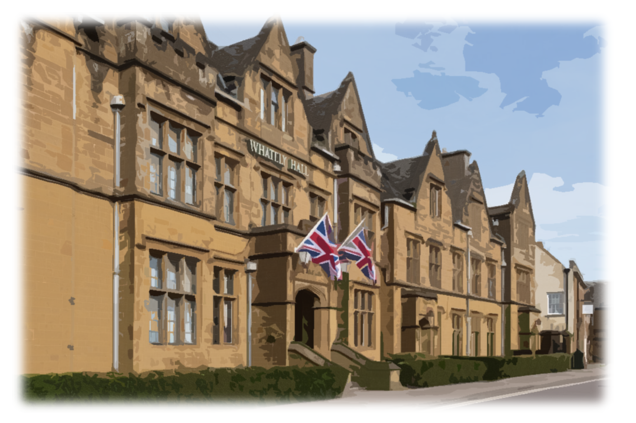
  • There are traditional options like Whately Hall Hotel, which offers the kind of multi-room, residential setup that works well for smaller conferences and training events. And while it is a hotel – it’s even part of a chain – it’s got a sense of character most chain hotels can only dream of.
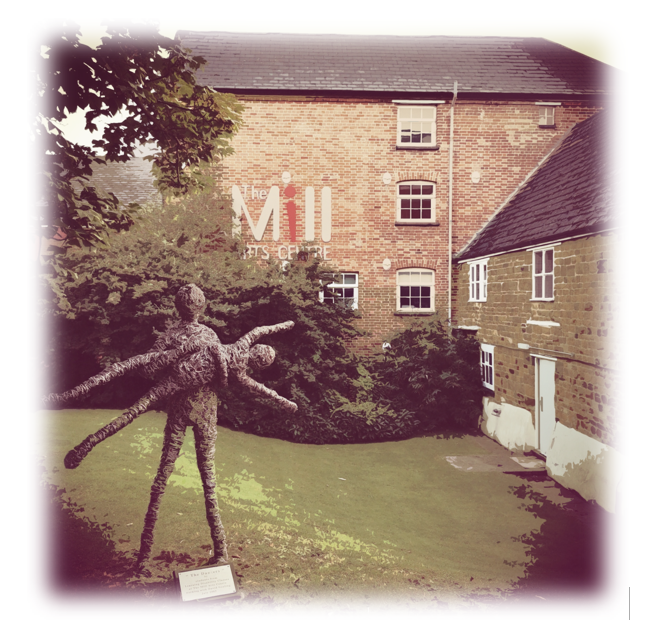
  • There are more flexible, creative spaces like The Mill Arts Centre, where theatre and meeting space overlap in useful ways – particularly for talks, presentations or anything that benefits from a slightly different setting.
  • There are hybrid, experience-led venues like The Light Banbury, which combine meeting space with built-in social and team-building elements. What better place to have an ‘all in one place’ team or corporate away day?
  • There are also more formal, civic spaces like Banbury Town Hall. Often associated with weddings and receptions, it’s also used for fundraising dinners, talks and larger gatherings—and can accommodate conferences of up to around 200 people.
  • And then there are the more informal, community-led options – places like Banbury Cricket Club Pavilion, which might not appear in traditional venue searches but can work perfectly well for the right kind of event.

There are probably others. But you get the idea.

Individually, none of these are trying to compete with Oxford’s more famous or larger venues. After all, they aren’t insane.

But taken together, they start to suggest something else: Banbury as a practical, well-connected option for smaller meetings (say, under 150 people – with some options stretching beyond that) where access, value and flexibility matter more than scale and prestige.

Those are the kind of meetings that make up a significant proportion of business activity and the vast majority don’t always need a flagship destination.

The Visibility Problem

Partly, it’s a question of scale and recognition. Larger destinations have established reputations, budgets and the resources to promote them. They also have organisations dedicated to amplifying their offer.

But it’s also a question of how the offer is presented.

At the moment, Banbury’s venues largely promote themselves individually. Which is entirely reasonable. And if any of the local stakeholder organisations are tackling this, I’ve not seen it. The result is that there’s no collective story about what Banbury offers as a place for businesses to meet.

And without that, it’s difficult for the town to register as an option in the first place.

None of this requires a grand strategy to start shifting. Sometimes it’s as simple as making the implicit explicit.

Banbury is:

  • well connected
  • easier to navigate than larger destinations
  • often better value than nearby alternatives
  • home to a mix of venues that suit different types of smaller events


That’s a perfectly viable proposition and if consistently articulated will do most of the heavy lifting.

Lean In to Locality

There’s also something else in Banbury’s favour, something we see percolating in recreational tourism too and that’s unique experiences, something a bit different, with an authenticity and sense of place. It can be harder to quantify than cost and location but it is increasingly a factor in decision making.

There’s a growing appetite in the MICE space venues that feel a little more grounded, less like interchangeable conference backdrops and more like real places with their own character. Market towns, independent venues, walkable centres – these are the environments where people can step out of a meeting, walk along the canal or browse the market and feel like they’ve actually gone somewhere.

If Banbury does have a place in this part of the market, it may not be about building something new so much as joining up what already exists—and being a little more deliberate about how it’s presented.

Because at the moment, the pieces are there. They’re just not quite telling a shared story.

Banbury’s Next Chapter? Why the Masterplan and Town of Culture Need Each Other

Banbury’s had one of those weeks where things suddenly feel like they might be happening.

Within the space of a day, two significant announcements landed. Cherwell District Council (along with partner organisations) confirmed that Banbury will submit an expression of interest for the UK Town of Culture 2028, and then also released details on a Banbury Masterplan, with a particular focus on Castle Quay and the town centre.

On paper, these are two separate developments. One is about culture; the other about regeneration and the built environment. In reality, they only make sense if they’re connected.

The “where” and the “why”

At its simplest, the Masterplan is the “where.” It deals with the physical shape of the town – how the centre is laid out, how spaces connect, what happens along the canal and through Castle Quay, and how people move through it all.

The Town of Culture bid, on the other hand, is the “why.” It’s about what fills those spaces – the activity, the stories, the creative life of the town, and the reasons people choose to spend time here rather than somewhere else.

You can have one without the other. But it rarely works well.

A town can invest in new paving, improved public spaces, and a refreshed waterfront – and still feel curiously hollow if there’s no clear sense of purpose behind it. Equally, a cultural programme – however ambitious – struggles to land if it isn’t rooted in spaces that support it, showcase it, and make it visible.

The real, long-term opportunity for Banbury lie in bringing these two strands together.

What success could look like

If the Masterplan and the Town of Culture bid are aligned from the outset, they reinforce each other.

The Masterplan becomes more than a redevelopment project. It becomes a framework for cultural life – ensuring that performance, creativity, community activity, and everyday cultural experiences are designed into the town rather than added as an afterthought. (And let’s be honest, “afterthought” is a design language we’ve seen a bit too much of in the past.)

At the same time, the Town of Culture bid gains credibility. It can point not only to heritage and existing assets, but to a clear, tangible commitment to shaping the town’s future – to creating spaces where culture can thrive long after any single year of programming has ended.

This is, in many ways, what these bids are really about. Not a single year of activity, but a longer-term shift in how a place thinks about itself and presents itself to others.

The risk of disconnect

Of course, the reverse is also true. If these two efforts proceed on parallel tracks without meaningful coordination, the result is familiar: a town centre that looks improved but feels no different; a cultural programme that generates activity, but lacks a strong sense of place. It would be a missed opportunity to turn two good ideas into something more substantial.

Banbury isn’t alone in facing this challenge. Many places have found that coordination – between organisations, between strategies, between ambitions – is where things become difficult. Which is why the timing of these announcements matters.

The process is the point

One of the more interesting aspect of a competition like this is that the process itself often delivers value, regardless of the outcome. Places that have gone through the City of Culture bidding process frequently talk about benefits such as:

  • Stronger collaboration between local organisations
  • A clearer articulation of local identity
  • Increased visibility for cultural activity
  • New investment and momentum that continues beyond the bid

In that sense, Banbury’s opportunity isn’t limited to whether it wins a title in 2028. The real question is what it builds along the way.

An open question

For all of this to work, two things will matter more than anything else.

The first is coordination – not just in principle, but in practice. Aligning plans, priorities, and delivery across organisations that don’t always naturally operate as one.

The second is visibility.

In other towns pursuing similar bids, there’s been a clear effort to share progress publicly, create central points of information, and invite input from residents and local groups. If Banbury is serious about this, that kind of openness will be important – not just for transparency, but for building the sense of shared ownership that these initiatives ultimately depend on.

Because culture, in the end, isn’t something that can be delivered to a place. It has to be built with it.

Early days

It’s still early. Plans will evolve, priorities will shift, and the practical realities of delivery will no doubt assert themselves soon enough.

But taken together, these two announcements suggest something more than “business as usual.” Handled well, they offer Banbury a chance not just to improve how the town looks, but to think more clearly about what it is – and what it wants to become.

That is a conversation worth having.


I’ve posted about Banbury as a potential bidder for Town of Culture before.  I didn’t think the great and the good would bother but I am delighted to have been proven wrong.

Day 6 of English Tourism Week in Banbury Heads Out to the Park

And we’re back on the #Banbury for #EnglishTourismWeek26 train with more insight into what makes Banbury such a great domestic tourism destination. Today – Spiceball Park. The glorious green space with the slightly weird name.

This post was inspired by yesterday’s glorious weather, weather that promises to continue today. I can’t say beyond that, but spring will bed in eventually. Right?

Let’s start with a few Spiceball stats and highlights:

  • At 26 acres, it is the largest park in the town.
  • It is a combination of ‘tended’ and ‘wild’ areas.
  • This is actually the second Spiceball Park (more on that later).
  • Setting for lots of town events (posted on those the other day)
  • Is home to the weekly Banbury parkrun
  • There’s a picnic area with free, DIY barbecue set-ups.
  • Features include a children’s play area, skate ramps, and a circuit of footpaths, some dotted with fitness equipment.

But before I tell you why Spiceball is one of the places to be as the weather improves, we have to address the “meatball” in the room. I mean – Spiceball? What kind of name is that?

I’ve touched on this before, but it amuses me so much, I can’t help sharing it again. I’m aware stuff like this often takes the form of slightly questionable local lore, but I found this on the Banbury Town Council website, so I have no reason to doubt it.

In 1894, the then town mayor, a butcher named Thomas Hankinson, donated a plot of land so that the ‘poor people of Banbury’ could have a recreation area. Hankinson, as it happens, was known for his handmade meatballs, known throughout town as ‘spiceballs’ (though I have no idea what the spice in question was).

The original gifted land was what we now know as Bridge Street Park. When the larger space was created in the current location, the name came along with it, and the old site got a new name.

Connect to Nature… and to Banbury’s activity hotspots

Spiceball Park is a ‘green link’ from the centre of Banbury to Grimsbury Reservoir and the Oxford Canal towpath.

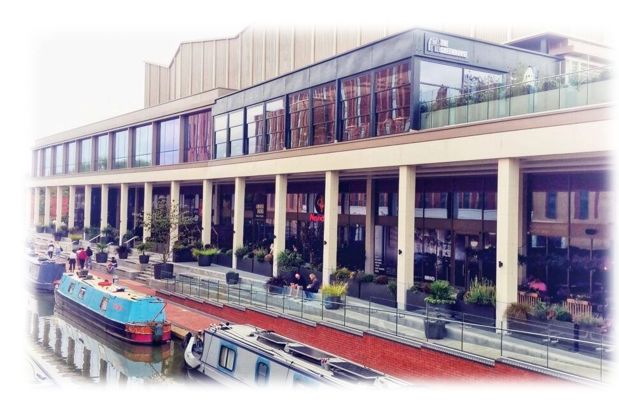
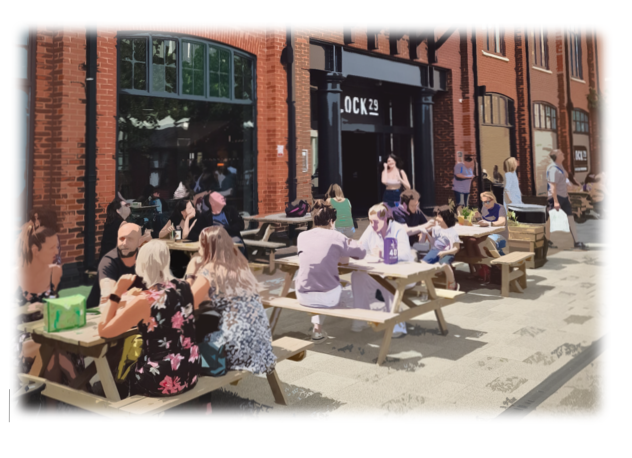
  • Paths at the southern end of the park lead you to The Light Banbury, The Mill Arts Centre, lock29.banbury, Castle Quay, and the Banbury Museum & Gallery – all just a few minutes’ walk away.
  • To the north, the park’s trails extend toward Grimsbury Reservoir and the Grimsbury Woodland Reserve (managed by the Banbury Ornithological Society). The reservoir probably deserves its own post, but for now, just know that it is surrounded by a flat, circular footpath (excellent for walking, jogging and dog walking), and is home to the Banbury Cross Sailing Club.

Generic visitor pamphlets might tell you the park is “lovely” – and it is. But it wouldn’t mention that Spiceball Park can be the core of a great day out, or even a relaxing weekend away.

It’s a great place to embrace nature, get some steps in, or have a run around with the dog or the kids – or both. When you’re ready to move indoors, you can wander from the park’s trails directly into the buzz of The Light Banbury for a film, head to The Mill for an evening of comedy, or visit Lock29 for a bit of independent shopping or lunch.

So, while the spiced meatballs are no more, we still have the park and all it offers. Get out there while the weather holds.