Change Afoot in Northern Oxfordshire
I did say I’d be back with more thoughts on the creation of the Northern Oxfordshire Council alongside Greater Oxford and the Ridgeway. And here I am.
Having had three options on the table, with each having strong and very vocal backers, no choice was ever going to get unanimous cheers – there are simply too many knock-on effects for that sort of unanimity. But sometimes you have a situation where a call must be made, and this was one of them.
IMO, pulling Banbury out from the administrative shadow and the massive tourist gravitational pull of Oxford is more positive than negative.
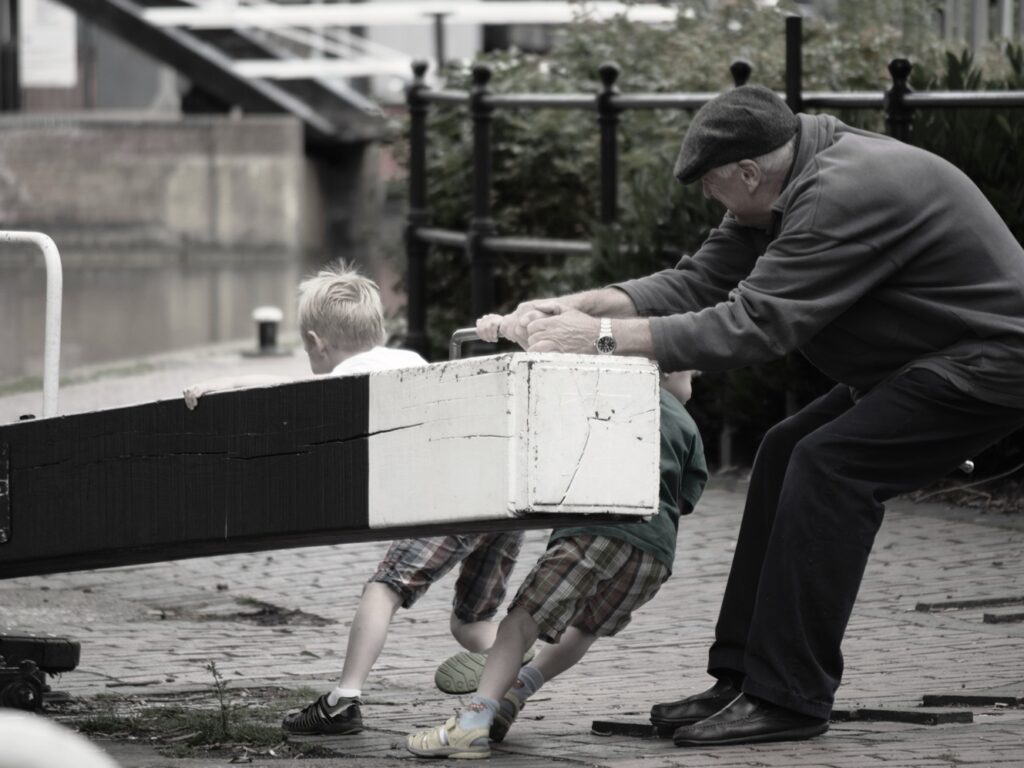
I don’t imagine that the adjustments and shifts will all be smooth. It’s not going to be a walk in the park. There will be plenty of serious administrative heavy lifting, new strategic alignments, a complete rethinking of how local services and budgets are managed, and political wrestling behind closed doors (and occasionally in the headlines).
Now, given what I’ve spent the last two years doing, it won’t surprise anyone to know I’ve looked at some of this through a visitor economy lens. Not exclusively, but it’s where my head is these days.
For years, Banbury has effectively been treated as an edge case (if it was noticed at all) while regional visitor economy efforts and investment were (understandably) drawn to Oxford.
Under the new structure, that dynamic flips and Banbury becomes the new administrative heavyweight, and that position has a direct impact on visitor economy decision-making surrounding the area.
Why do I think Banbury becomes the administrative centre? Well, it’s not because I am privy to any secrets – I can assure you of that. It just makes the most sense. At roughly 50,000 residents, Banbury will be the largest urban settlement in the new Northern authority, outweighing “sibling” towns like Witney (~30k) and Bicester (also ~30k). As Cherwell’s current headquarters is already at Castle Quay, the political and administrative gravity of the new council naturally sits right here in town.
And yes, I know West Oxfordshire’s offices are in Witney. I love Witney. But from a logistical point of view, it makes more sense (to me, anyway) for the headquarters of the council to be in a location with robust transport links. Witney, delightful though it is, simply doesn’t have those.
So, assuming I am right about Banbury becoming the administrative centre of the new council (I might not be, but you never know), it could give the local visitor economy a much clearer focus.
Instead of trying to fit into a generic “Cotswolds-adjacent” or ‘Oxford-overflow’ box, a Northern Oxfordshire council has an opportunity to define its own visitor identity.
Uniting much of Cherwell with West Oxfordshire gives a single entity control over a unique “Cotswolds & Canal” corridor. Or it could lean into the idea of being England’s crossroads: canals, market towns, country houses, motorsport, the edge of the Cotswolds, and shopping. It’s a story that is economically coherent and distinct from what will very likely remain Oxford’s world-famous academic and heritage offer.
Banbury, thanks to its location and transport links, then evolves from a commuter and transit town into a destination hub. Up until now, regional tourism strategy was all about “dispersing” visitors out of overcrowded Oxford for quick day trips. The new Northern council won’t be trying to manage Oxford’s crowds; it will be focused on keeping visitors and spend right here in the north.
With our rail links and direct M40 access, Banbury is the logical base for people to stay, eat, and explore the wider northern landscape. It’s the next evolution of something we’ve said on The Banburian blog for years: Banbury’s central location makes it an ideal base for exploring some of England’s premier attractions without paying premier-attraction prices for hotels. Stay at a hotel or B&B in Banbury and you are less than an hour (often less than 30 minutes) from a wealth of locations serving a wide range of interests.
In order for the whole of the new council area to feel the benefit of those connections, the “last mile” and the “spoke” parts of the “hub-and-spoke” transport infrastructure will need serious thinking. But then, a lot of things will need serious thinking in the new council’s landscape. What’s one more?
None of this is going to happen automatically, and it will take strong local advocacy to make sure our town centre gets the focus and investment it deserves. But it feels to me like, after a long time, the map is finally drawn in a way that allows the northern part of the county to shine in its own way.