Banbury’s Next Chapter? Why the Masterplan and Town of Culture Need Each Other

Banbury’s had one of those weeks where things suddenly feel like they might be happening.

Within the space of a day, two significant announcements landed. Cherwell District Council (along with partner organisations) confirmed that Banbury will submit an expression of interest for the UK Town of Culture 2028, and then also released details on a Banbury Masterplan, with a particular focus on Castle Quay and the town centre.

On paper, these are two separate developments. One is about culture; the other about regeneration and the built environment. In reality, they only make sense if they’re connected.
The “where” and the “why”

At its simplest, the Masterplan is the “where.” It deals with the physical shape of the town – how the centre is laid out, how spaces connect, what happens along the canal and through Castle Quay, and how people move through it all.

The Town of Culture bid, on the other hand, is the “why.” It’s about what fills those spaces – the activity, the stories, the creative life of the town, and the reasons people choose to spend time here rather than somewhere else.

You can have one without the other. But it rarely works well.

A town can invest in new paving, improved public spaces, and a refreshed waterfront – and still feel curiously hollow if there’s no clear sense of purpose behind it. Equally, a cultural programme – however ambitious – struggles to land if it isn’t rooted in spaces that support it, showcase it, and make it visible.

The real, long-term opportunity for Banbury lie in bringing these two strands together.

What success could look like

If the Masterplan and the Town of Culture bid are aligned from the outset, they reinforce each other.

The Masterplan becomes more than a redevelopment project. It becomes a framework for cultural life – ensuring that performance, creativity, community activity, and everyday cultural experiences are designed into the town rather than added as an afterthought. (And let’s be honest, “afterthought” is a design language we’ve seen a bit too much of in the past.)

At the same time, the Town of Culture bid gains credibility. It can point not only to heritage and existing assets, but to a clear, tangible commitment to shaping the town’s future – to creating spaces where culture can thrive long after any single year of programming has ended.

This is, in many ways, what these bids are really about. Not a single year of activity, but a longer-term shift in how a place thinks about itself and presents itself to others.

The risk of disconnect

Of course, the reverse is also true. If these two efforts proceed on parallel tracks without meaningful coordination, the result is familiar: a town centre that looks improved but feels no different; a cultural programme that generates activity, but lacks a strong sense of place. It would be a missed opportunity to turn two good ideas into something more substantial.

Banbury isn’t alone in facing this challenge. Many places have found that coordination – between organisations, between strategies, between ambitions – is where things become difficult. Which is why the timing of these announcements matters.

The process is the point

One of the more interesting aspect of a competition like this is that the process itself often delivers value, regardless of the outcome. Places that have gone through the City of Culture bidding process frequently talk about benefits such as:

  • Stronger collaboration between local organisations
  • A clearer articulation of local identity
  • Increased visibility for cultural activity
  • New investment and momentum that continues beyond the bid

In that sense, Banbury’s opportunity isn’t limited to whether it wins a title in 2028. The real question is what it builds along the way.
An open question

For all of this to work, two things will matter more than anything else.

The first is coordination – not just in principle, but in practice. Aligning plans, priorities, and delivery across organisations that don’t always naturally operate as one.

The second is visibility.

In other towns pursuing similar bids, there’s been a clear effort to share progress publicly, create central points of information, and invite input from residents and local groups. If Banbury is serious about this, that kind of openness will be important – not just for transparency, but for building the sense of shared ownership that these initiatives ultimately depend on.

Because culture, in the end, isn’t something that can be delivered to a place. It has to be built with it.

Early days

It’s still early. Plans will evolve, priorities will shift, and the practical realities of delivery will no doubt assert themselves soon enough.

But taken together, these two announcements suggest something more than “business as usual.” Handled well, they offer Banbury a chance not just to improve how the town looks, but to think more clearly about what it is – and what it wants to become.

That is a conversation worth having.


I’ve posted about Banbury as a potential bidder for Town of Culture before.  I didn’t think the great and the good would bother but I am delighted to have been proven wrong.
Banbury as ‘Town of Culture’? Anything’s possible…

Earlier this month, news trickled out that there was to be a brand-new UK Town of Culture competition — a sort of sister effort to the more established City of Culture programme. And someone who writes about a UK town quite a lot, I got to thinking – what if Banbury were to put itself forward? What would that involve and — perhaps a bigger question — does Banbury have the cultural points to make a serious bid?

On the assumption that the City of Culture process would almost certainly form the blueprint for Town of Culture, I gave the documentation a read through and this list is the result.

5 points that credible submissions should include and how, IMO, Banbury stacks up.

1. A clear purpose and a long-term vision

Winning isn’t about throwing a year-long festival. It’s about culture as a driver of regeneration, community identity, pride and economic growth. Local participation, skills development, creative industries, tourism and long-term legacy all matter.

Banbury would need to show:

  • How culture boosts access and inclusion
  • How creativity fuels the local economy
  • How community cohesion is strengthened
  • How the benefits would last well beyond “the year of culture”

In short: it’s not about one big event. It’s about cultural transformation.

2. A compelling story — the “why Banbury, why now?”

Strong bids tell a story rooted in local identity, history, community character and connection to wider cultural networks. Banbury’s story is… layered, and frankly, pretty fascinating.

We have:

  • A multi-era heritage: Civil War, industrial history, canal culture, and literary connections
  • A famous identity thanks to a certain nursery rhyme
  • A town in transition, redefining itself in a modern context
  • Regional cultural links (Banbury Museum’s touring exhibitions are a great example)

A good submission weaves these strands together into something coherent and compelling.

3. The ability to deliver

A beautiful story won’t win on its own — applicants need a proven structure for delivering cultural programmes. The City of Culture criteria emphasise leadership, track record, cross-sector cooperation and sustainable planning. Banbury has excellent organisations and quite a few passionate stakeholders — but the collaborative structures would, again IMO, need real strengthening.

4. Measurable impact

There would need to be evaluation plans made to collect baseline data and to measure KPIs linked to expected outcomes. Much of which continues long after any win is announced. Winning isn’t the end; it’s the midpoint. The government wants to see a return on investment.

5. Inclusivity and access

A winning bid must involve everyone — not just established cultural players or the traditionally defined ‘great and the good.’ Grassroots groups, young people, diverse communities, neighbourhoods outside the town centre — all need a place in the plan. Fortunately, Banbury’s grassroots scene is strong: arts groups, choirs, music nights, heritage societies and community-led projects all contribute to a vibrant cultural fabric.


So… what does Banbury have going for it? A lot.

Heritage & History

  • Banbury Museum & Gallery
  • Tooley’s Boatyard
  • Banbury Cross, the Fine Lady statue
  • Ye Olde Reine Deer Inn
  • St Mary’s Church
  • The Oxford Canal

Arts & Culture

  • The Mill Arts Centre
  • Public art trails
  • A lively live-music scene
  • Local orchestras, choirs, amateur dramatics

Identity & Traditions

  • Banbury Cakes
  • The Hobby Horse tradition
  • The iconic nursery rhyme

Food & Family Culture

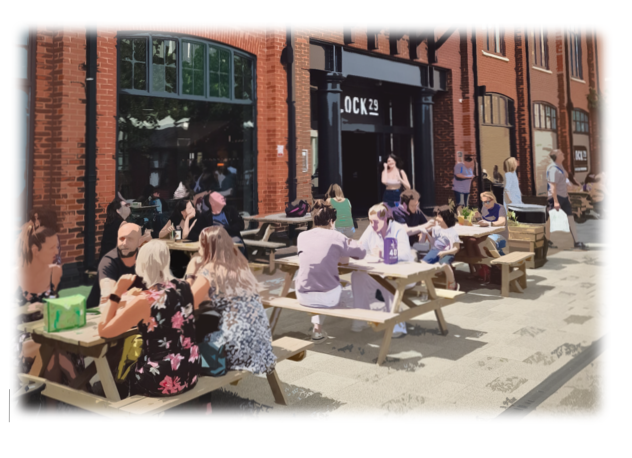
  • Lock29
  • The Light
  • Two major food festivals
  • A notably international restaurant scene — Turkish, Thai, Japanese, Polish, Italian, Indian and more

The Surrounding Cultural Ecosystem – more on this topic later but it is a significant part of a submission)

  • Broughton Castle
  • Upton House
  • Sulgrave Manor
  • Hook Norton Brewery
  • The Edgehill battlefield
  • British Motor Museum
  • Bicester Heritage

These assets tell a story of a town with depth, character and huge potential — not one that needs to invent a cultural identity, but one that already has one.

Could Banbury win?

It wouldn’t be easy. It would take collaboration and ambition. But the building blocks are absolutely there. Even the process of preparing a submission could spark new partnerships, projects and pride.

And honestly? It might just be worth it.

Banbury 2024 – End of Year Round Up

I’ve been stupidly busy of late and not able to post as much as I would like. But I’ll definitely try and do better in 2025. I am more active on the Banburian Facebook page (sometimes easier to share things on the fly there) so you can always follow me there as well to make sure you don’t miss anything.

In the meantime. Just a list of things I have noted of late and which are relevant to our collective local interests. Continue reading “Banbury 2024 – End of Year Round Up”

Another Empty Article About Empties

Recently, we’ve been treated to yet another ‘Banbury nothing but empty shops’ style piece in the regional media. You know the ones – a collection of photos of empty shops, dire declarations that the town is in an economic death spiral despite Banbury steadfastly (and repeatedly over the years) refusing to accommodate them by dying as described.


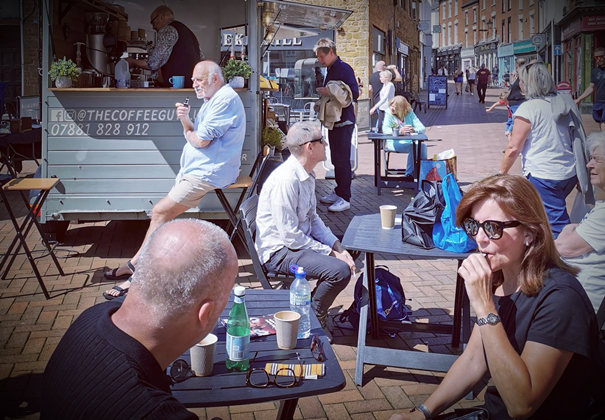
Behold all these locals stubbornly enjoying the marketplace and once again failing to take heed that Banbury is supposed to be a ghost town.

Continue reading “Another Empty Article About Empties”